
Heat Sealing Element Care & Maintenance for Impulse Heat Sealers
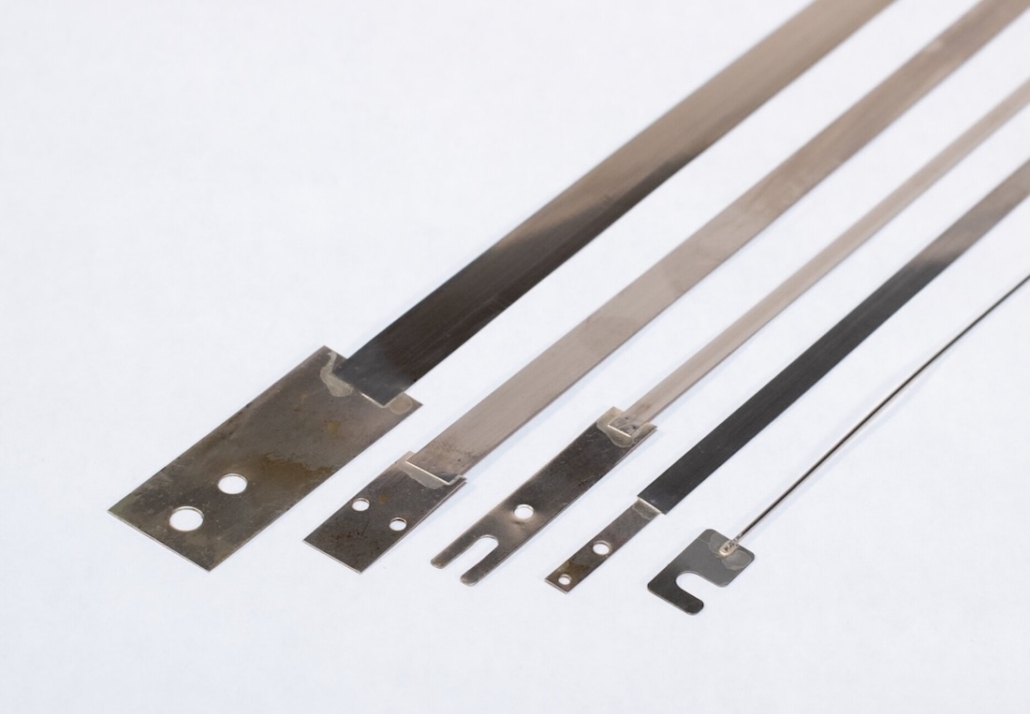
The nichrome heating element is one of the most critical parts of an impulse heat sealer. Whether a machine is making a 4″ seal or a 144″ seal, the element must provide consistent heat for reliable seal quality.
When properly installed and used under normal operating conditions, heating elements should last through many sealing cycles but will eventually need to be replaced due to normal wear.
Below are the basic replacement steps, followed by common reasons heating elements break prematurely.
Replacing the Heating Element
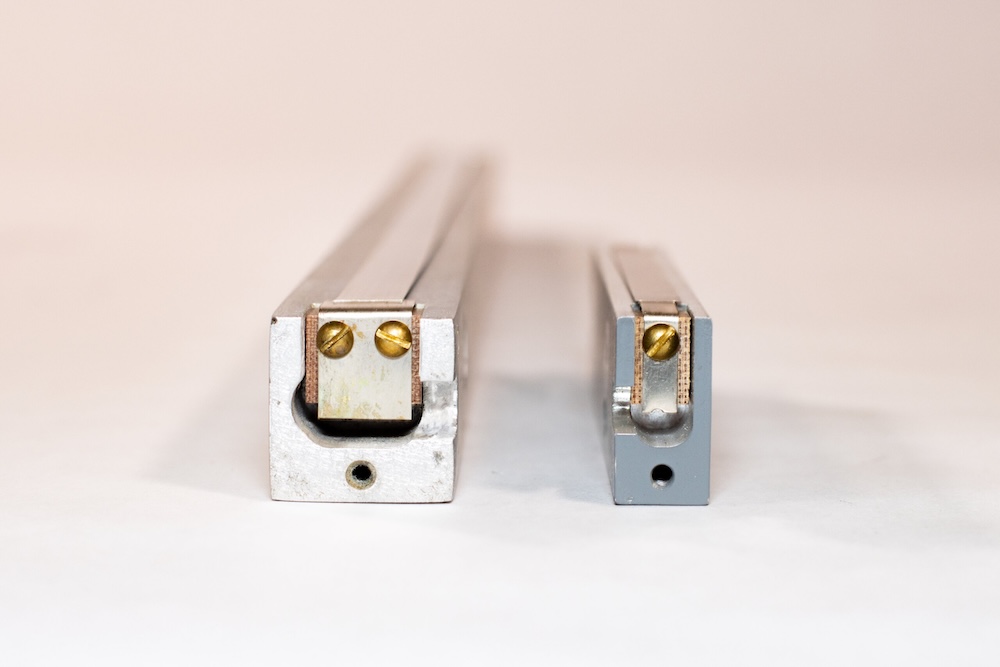
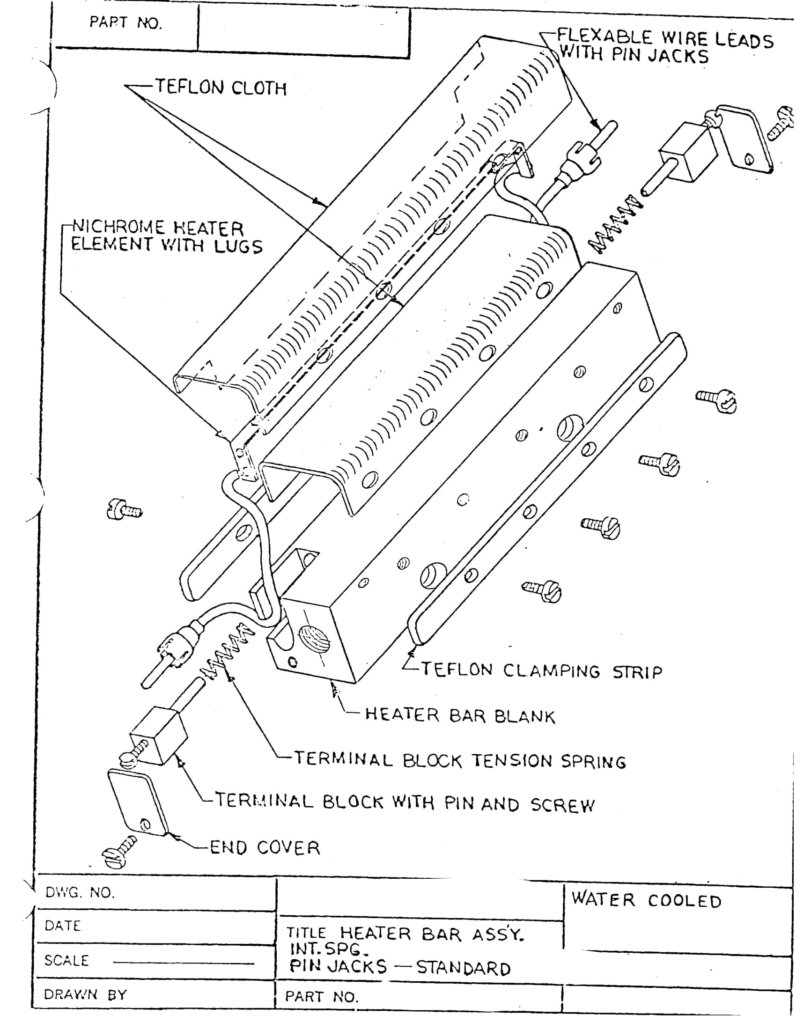
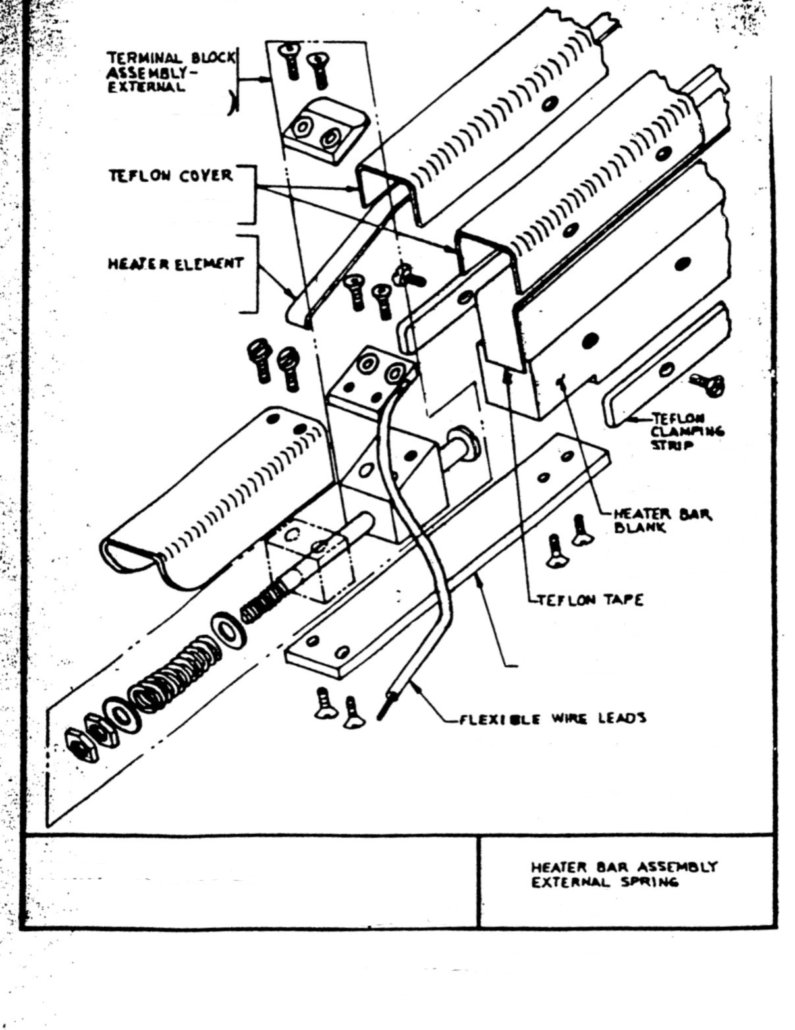
Heater bars can use different terminal block configurations, including internal terminal blocks or external terminal block assemblies. Choosing the correct nichrome heating element depends on the terminal block style used on your machine.
The steps below explain how to replace heating elements for both configurations.
For heating elements with end tabs:
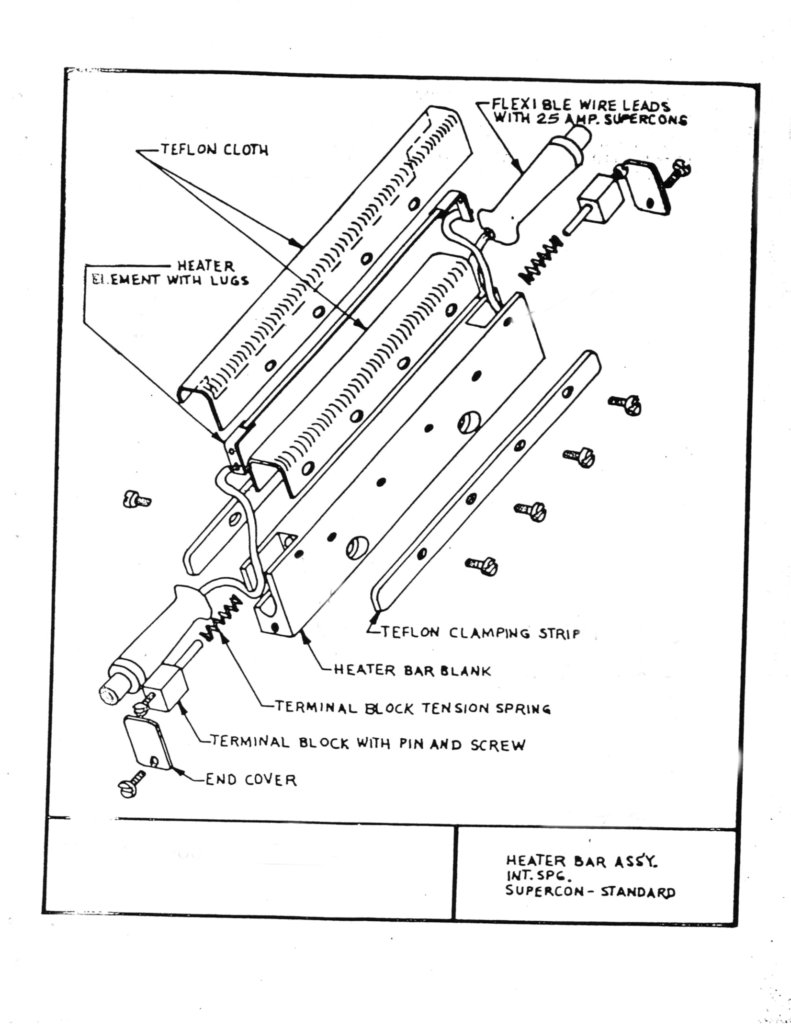
- Remove the end covers.
- Remove the top PTFE fabric cover that protects the element.
- Secure the spring-loaded terminal blocks in place with screws.
- Unfasten the screws that secure the end tabs to the terminal blocks. Remove the heating element from the terminal blocks.
- Remove and inspect the bottom PTFE fabric cover that separates the element from the aluminum bar. If damaged, replace.
- Wipe a thin coating of silicone release agent onto the bottom cover.
- Unsolder the wire leads from the damaged element’s end tabs.
- Place the new element onto the heater bar and carefully bend the end tabs into place.
- Secure the heating element to the terminal blocks with screws.
- Solder the wire leads onto the new heating element’s end tabs.
- Remove the screws holding the spring-loaded terminal blocks in place so the heating element can tension properly.
- Trim the bottom PTFE cover to fit between the two terminal blocks. Apply a thin coating of silicone release agent to the cover before centering it under the element.
- Apply a thin coating of silicone release agent onto the heating element.
- Replace the top PTFE fabric cover that protects the element.
- Reinstall the end covers.
Note: When using PTFE Zone Tape, use a layer of PTFE tape matching the width of the aluminum bar in place of the bottom PTFE cover to insulate the element from the bar.
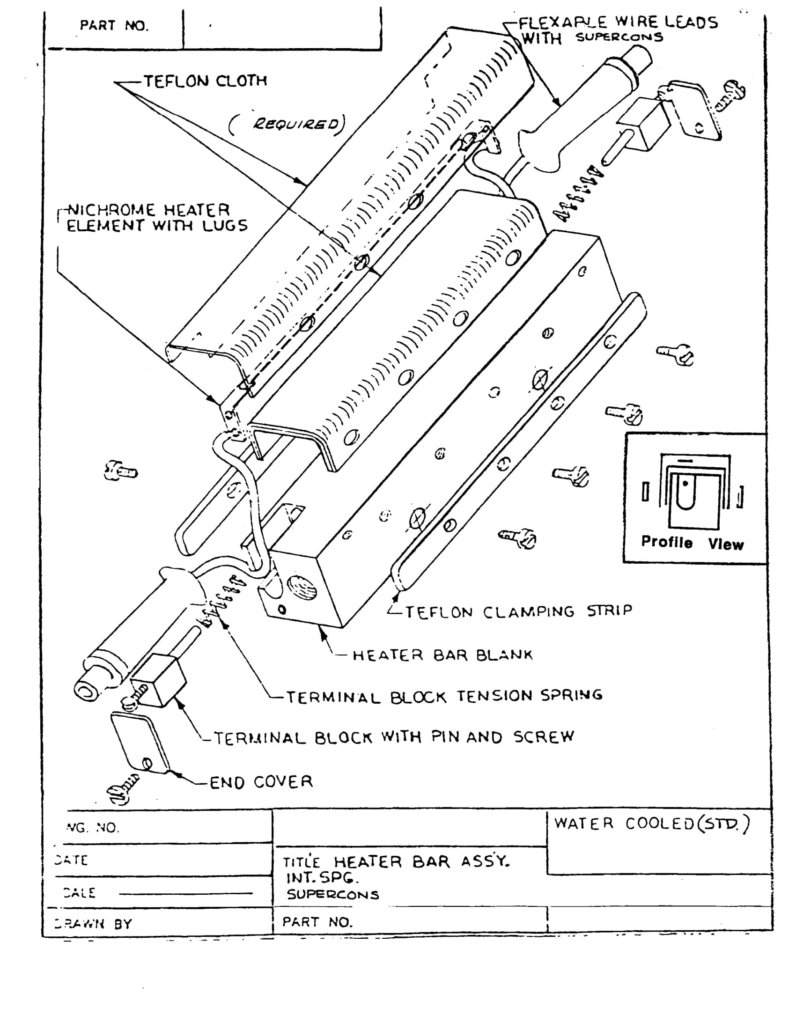
For heating elements with external assemblies:
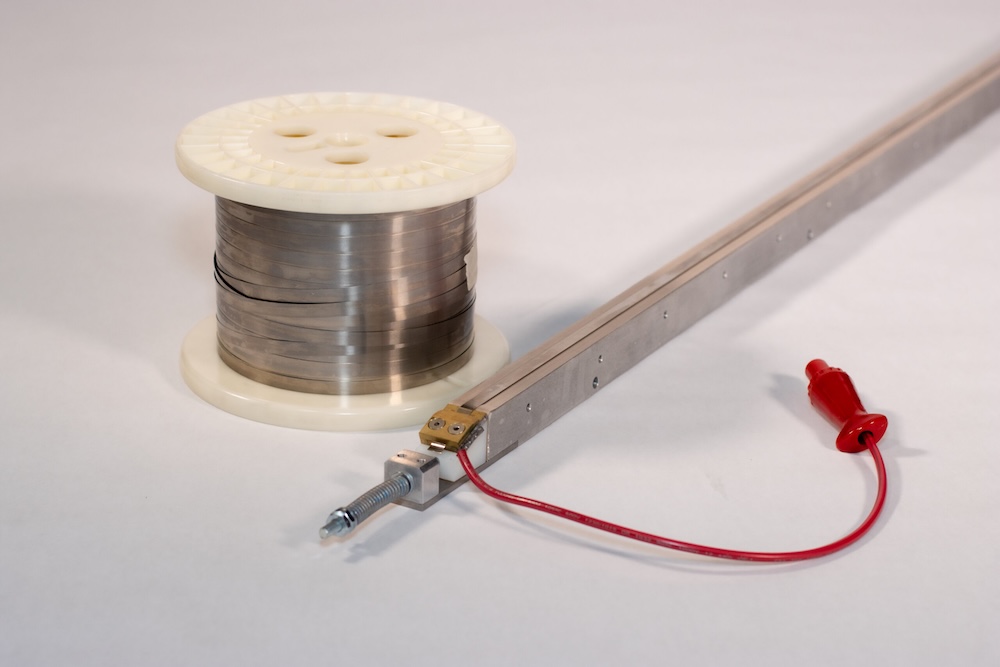
- Unplug the wire leads from their sockets.
- Remove the end covers.
- Remove the top PTFE fabric cover that protects the element.
- Release the spring tension from both end assemblies.
- Unfasten the screws that secure the heating element to the brass plates.
- Remove the heating element.
- Remove and inspect the bottom PTFE fabric cover that insulates the element from the aluminum bar. If it is damaged, replace it.
- Inspect the PTFE tape that adheres to the aluminum heater bar. If it is damaged, replace it.
- Attach the heating element between the brass plates of one end assembly and fasten the screws to secure one side.
- Place the heating element along the heater bar and pull the heating element through the other end assembly. Using pliers, pull the heating element taut and lock the brass plate.
- Trim the bottom PTFE cover so it fits underneath the element. Apply a thin coating of silicone release agent to the cover before centering it under the element.
- Apply a thin coating of silicone release agent onto the heating element.
- Replace the top PTFE fabric cover that protects the element.
- Adjust the springs on each end until they are compressed to 1-5/8″.
- Reinstall the end covers.
Note: When using PTFE Zone Tape, use a layer of PTFE tape matching the width of the aluminum bar in place of the bottom PTFE cover to insulate the element from the bar.
Reasons for Heating Element Breakage
Heating elements are consumable parts, but they should not break repeatedly under normal operating conditions. If an element fails prematurely, the cause is often related to machine setup, worn components, or improper use.
Common causes include:
- Opening the sealing jaws before the heat impulse cycle has ended can cause the heating element to overheat and weaken prematurely.
- A foreign object caught between the sealing jaws can kink the heating element and permanently damage the silicone rubber.
- Insufficient insulation between the heating element and the aluminum heater bar can cause a short circuit. Make sure the PTFE covers are in good condition and fully cover the aluminum heater bar.
- Defects in the silicone rubber can create uneven pressure along the heating element, causing hot spots that weaken the element over time. These hot spots can also damage the PTFE covers, burn the product being sealed, and further damage the silicone rubber.
- Missing or defective spring-loaded terminal blocks can damage the heating element. The springs are designed to maintain tension and keep the element straight as it expands during the heat cycle.
Support
If you are experiencing repeated element breakage, hot spots, or inconsistent seals, contact us for assistance. We can help identify the proper heating element size, end configuration, and replacement materials for your heat sealing application.
 C&J Supplies Inc.